Why Can't I Stop Eating Once I Start?

Understanding the feeling of losing control around food
Perhaps you've experienced something like this:
You weren't particularly hungry when you started eating.
Maybe you grabbed a few cookies, a handful of chips, or a snack while preparing dinner.
You told yourself you'd have just a little.
And then suddenly, you found yourself eating far more than you intended.
Afterward, you felt frustrated, uncomfortable, or ashamed.
You may have wondered:
"Why couldn't I just stop?"
If you've asked yourself this question, you're not alone.
Many women struggle with the experience of feeling out of control around food, and many assume it means they lack discipline or willpower.
In reality, the answer is often far more complex, and far more compassionate.
You might recognize these behaviours and emotions in yourself...
You frequently eat more than you planned.
You tell yourself you'll have "just one" and then keep going.
You feel in control around food some days and completely out of control on others.
You eat quickly once you start.
You continue eating even after feeling physically full.
You feel guilty or ashamed afterward.
You promise yourself it won't happen again.
You find yourself repeating the same cycle over and over.

If any of these feel familiar, know that you are not broken.
There are often understandable reasons these patterns develop.

Many people assume:
"If I were stronger, I could stop."
But if willpower were the answer, most people would solve this problem very quickly.
The truth is that eating behaviour is influenced by far more than determination.
It is shaped by biology, psychology, emotions, habits, stress, environment, and nervous system responses.
When we reduce the struggle to "I just need more self-control," we often miss what is actually driving the behaviour.
It's rarely about a lack of willpower
The Reasons We May Lose Control of Our Eating:
Your body may be trying to catch up

One common reason people struggle to stop eating is that their body has been undernourished.
This doesn't necessarily mean starvation.
It can happen after:
skipping meals
eating too little during the day
restricting certain foods
chronic dieting
trying to "be good"
When the body feels deprived, it naturally becomes more focused on food.
This isn't a flaw. It's a survival mechanism.
Your body is trying to ensure its needs are met.

Restriction could be creating rebound eating
Many women spend years living by rules such as:
"I shouldn't eat carbs."
"Sugar is bad."
"I have to be careful."
"I've already had too much."
Ironically, the more forbidden a food becomes, the more attention it often receives.
When we finally allow ourselves that food, it can feel difficult to stop.
Part of the urgency isn't hunger.
It's relief.
The food we've been trying so hard to avoid is finally available.
Stress changes the equation

Have you ever noticed that stopping feels harder when you're overwhelmed?
Stress affects both the body and the brain.
When we're stressed, we naturally seek comfort, reward, distraction, and relief.
Food can temporarily provide all four.
This doesn't mean you're weak.
It means your nervous system has learned that eating helps you cope, even if only for a short time.
The guilt cycle keeps the pattern alive

One of the most painful parts of this experience is what happens afterward.
Many people respond with:
self-criticism
shame
stricter food rules
promises to compensate tomorrow
Unfortunately, these responses often create the very conditions that make the cycle more likely to happen again.
Stress increases.
Restriction increases.
Food becomes more emotionally charged.
And the cycle repeats.
Sometimes you're not hungry for food
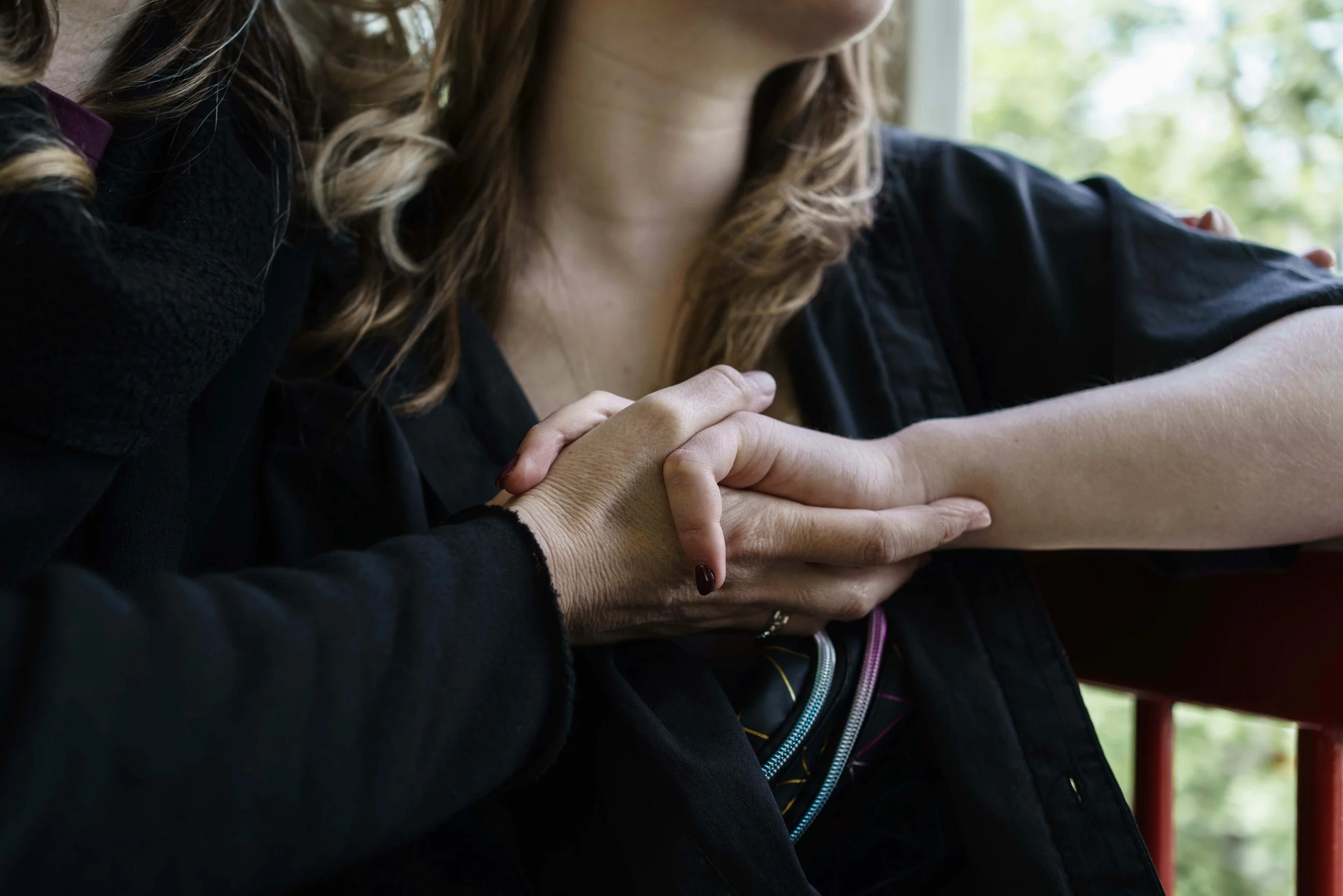
Many people are surprised to discover that what they're seeking isn't actually food.
They're seeking:
comfort
rest
connection
reassurance
distraction
relief from anxiety
a break from responsibility
Food becomes the messenger carrying those needs.
The challenge is that food can only partially meet them.
So we continue eating, hoping to find the feeling we're looking for.
Habits have become automatic

Not all eating is emotional.
Sometimes it's simply learned.
The brain loves efficiency.
When we repeat the same behaviour enough times, it becomes automatic.
For example:
eating while watching television
snacking while driving
grazing while working
eating every evening after the children are asleep
Eventually, the cue alone can trigger the behaviour.
The body begins moving through the routine before conscious awareness even catches up.
What if the goal was no longer perfect control?
Many women have spent years trying to become someone who never overeats.
Someone who always makes the "right" choice.
Someone who never struggles.
But healing isn't about becoming perfect.
It's about becoming aware.
The goal is not to control yourself into peace.
The goal is to understand yourself into peace.
That shift changes everything.

What actually helps?
While everyone's experience is different, many people find it helpful to begin by:
eating consistently throughout the day
reducing all-or-nothing thinking
becoming curious about triggers
supporting nervous system regulation
practicing self-compassion after difficult moments
learning to pause before acting automatically
identifying emotional needs underneath urges
These changes rarely happen overnight.
But they can create a very different relationship with food over time.
You may find these kits helpful:
Where should I begin?

If you frequently feel caught in the cycle of eating automatically and struggling to stop once you've started, it can be helpful to focus on understanding your triggers before trying to control your behaviour.
My Trigger Response Reset hypnosis kit was designed to help you recognize patterns, regulate your nervous system, and create more space between an urge and your response.
Because lasting change rarely comes from forcing yourself to stop.
It often begins by understanding why the urge was there in the first place.